
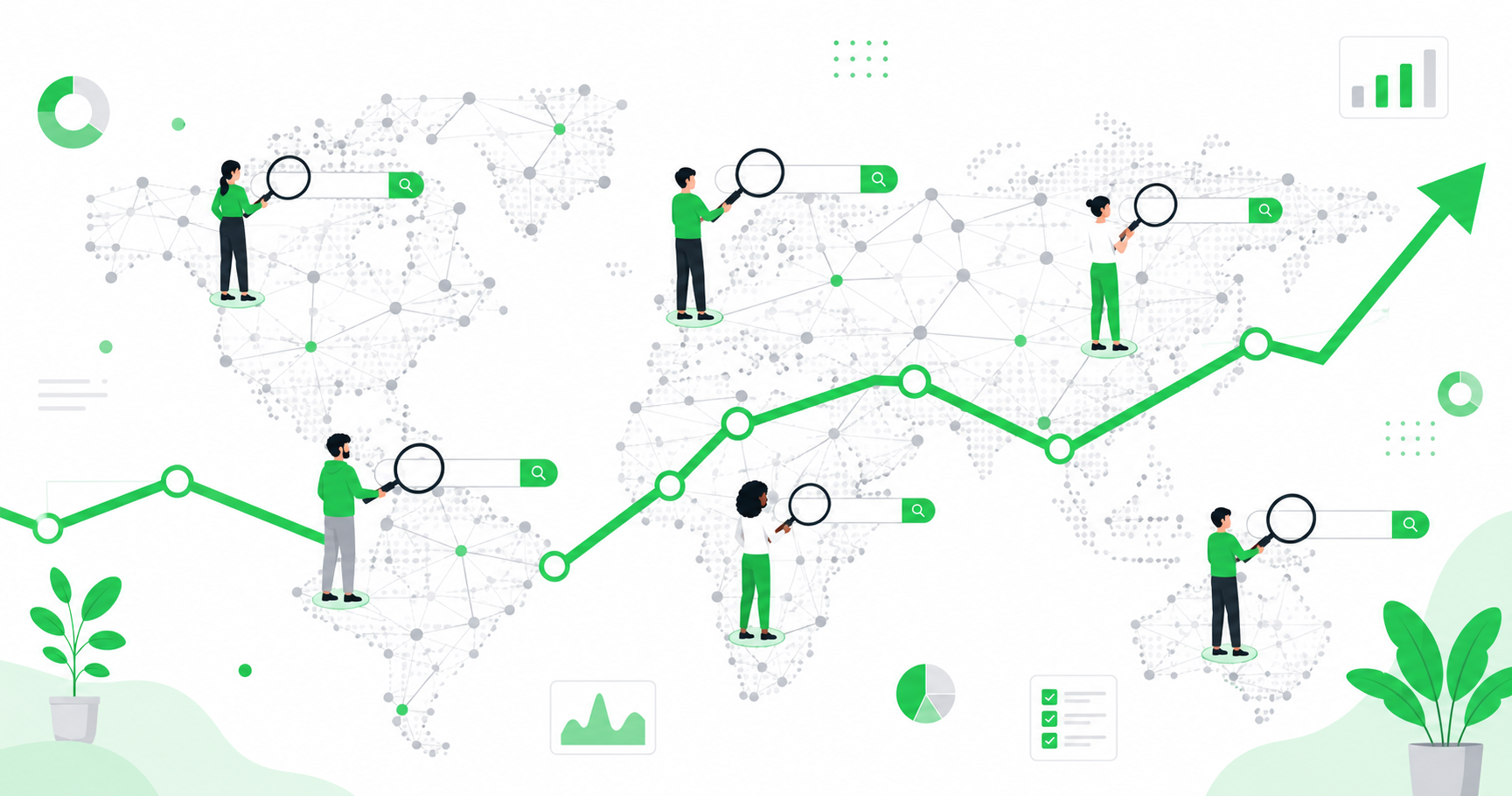
Search in 2026 looks very little like search in 2020. Nearly six in ten Google searches now end without a click. AI Overviews sit on top of the results for most commercial queries, and a growing share of discovery happens inside answer engines like ChatGPT and Perplexity rather than on a results page at all. Rankings still matter — but visibility now means being the source that search engines and AI systems trust, cite, and recommend across dozens of surfaces you can't see from your own office.
That last part is the problem. Modern SEO has quietly become a labor problem. The strategies that work now — demonstrating real experience, verifying local data, understanding true search intent, producing original research, quality-checking AI-assisted content — all require something automation can't fake: real people, in real places, doing real checks. That's exactly what a distributed workforce provides, on demand and at a fraction of the cost of an agency retainer.
Here's where crowdsourced micro-work moves the needle on SEO, and where it doesn't.
1. See the search results your tools can't see
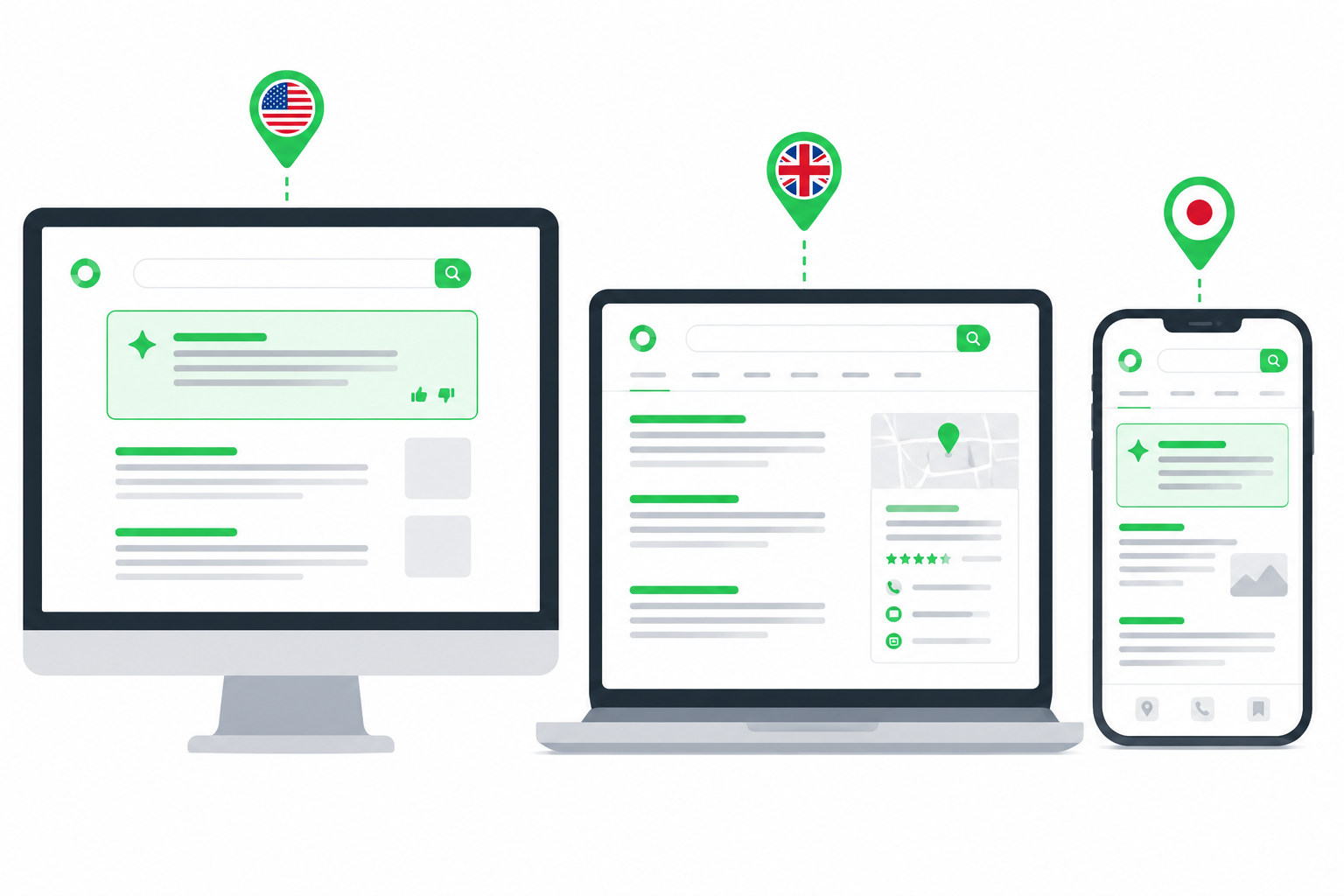
Rank trackers report an average position from a data center. But your actual customers see personalized, localized, device-specific results — and increasingly, AI-generated answers that no traditional tool monitors well. Industry surveys suggest only around 14% of marketers track their AI visibility at all, even while calling AI optimization a core strategy.
A distributed workforce closes that blind spot. Hundreds of workers across different countries, devices, and networks can check the same queries and report back what they actually see: Does your brand appear in the AI Overview? Which competitor gets cited by Perplexity for your money keyword? Does the map pack show your Vilnius location or your competitor's? This is search visibility research as it should be done in 2026 — from the messy, personalized reality of real users, not the sterile view of a rank-tracking bot.
2. Audit your local SEO footprint with people on the ground
AI search systems cross-reference trusted directories to confirm a business is real before recommending it. Inconsistent name, address, and phone data across listings quietly erodes that trust — and it's tedious, high-volume work to verify: exactly the kind of task that's perfect for micro-tasking.

Workers can sweep every directory that lists your locations and flag mismatched hours, dead phone numbers, and outdated addresses. And with geo-verified field tasks, you can go a step further than any desk audit: send local workers to photograph storefronts, confirm signage, and verify that what Google Business Profile claims matches what's physically there. For multi-location brands, that ground truth is nearly impossible to gather any other way.
3. Label search intent with human judgment
The most common reason pages fail to rank in 2026 isn't backlinks or technical debt — it's intent mismatch. People no longer type two-word keywords; they ask specific, conversational questions, and the engine decides which flavor of answer deserves visibility.
Keyword tools guess at intent with algorithms. Humans just know. A crowd of workers can review your keyword list and label each query the way a real searcher understands it — looking to buy, comparing options, seeking a definition, troubleshooting a problem — and note what kind of result Google currently rewards for it. Human-labeled intent data turns a keyword spreadsheet into a content plan that matches what searchers actually want, which is the single highest-leverage SEO improvement most sites can make.
4. Generate original data that earns links and AI citations
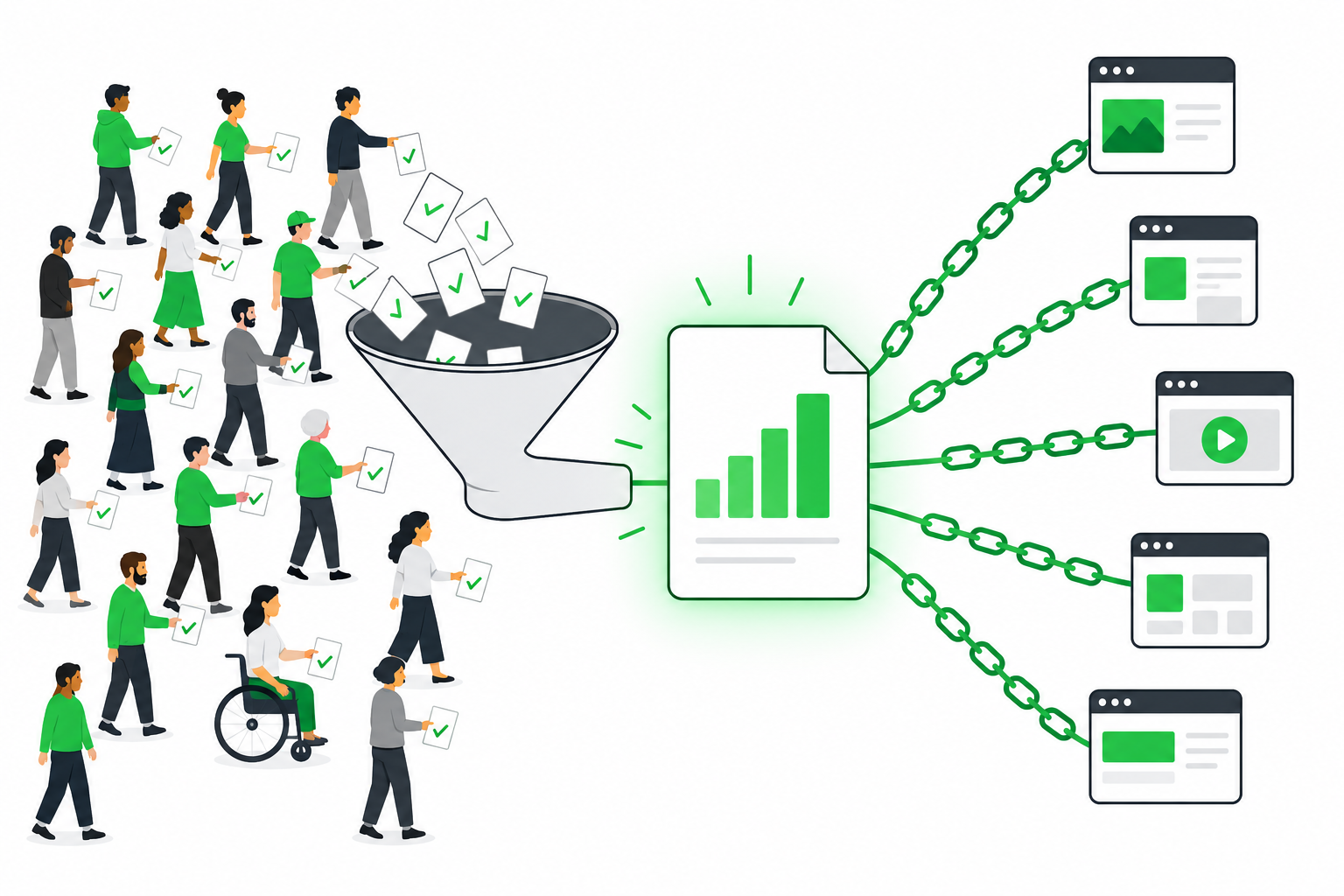
With AI able to summarize existing information instantly, the content that still earns links — and gets cited inside AI answers — is content that contains something a summary can't: original data. Surveys, market research, and first-party statistics are the strongest link magnets in the AI era, precisely because no language model can generate them.
This is a workforce play from end to end. Distribute a survey to a thousand screened respondents in your target demographic, have workers collect pricing data across a market, or run structured web research on an industry question no one has quantified. The result is a data asset your competitors can't copy, journalists want to reference, and answer engines cite with your name attached.
5. Put human experience into your content — because E-E-A-T demands it
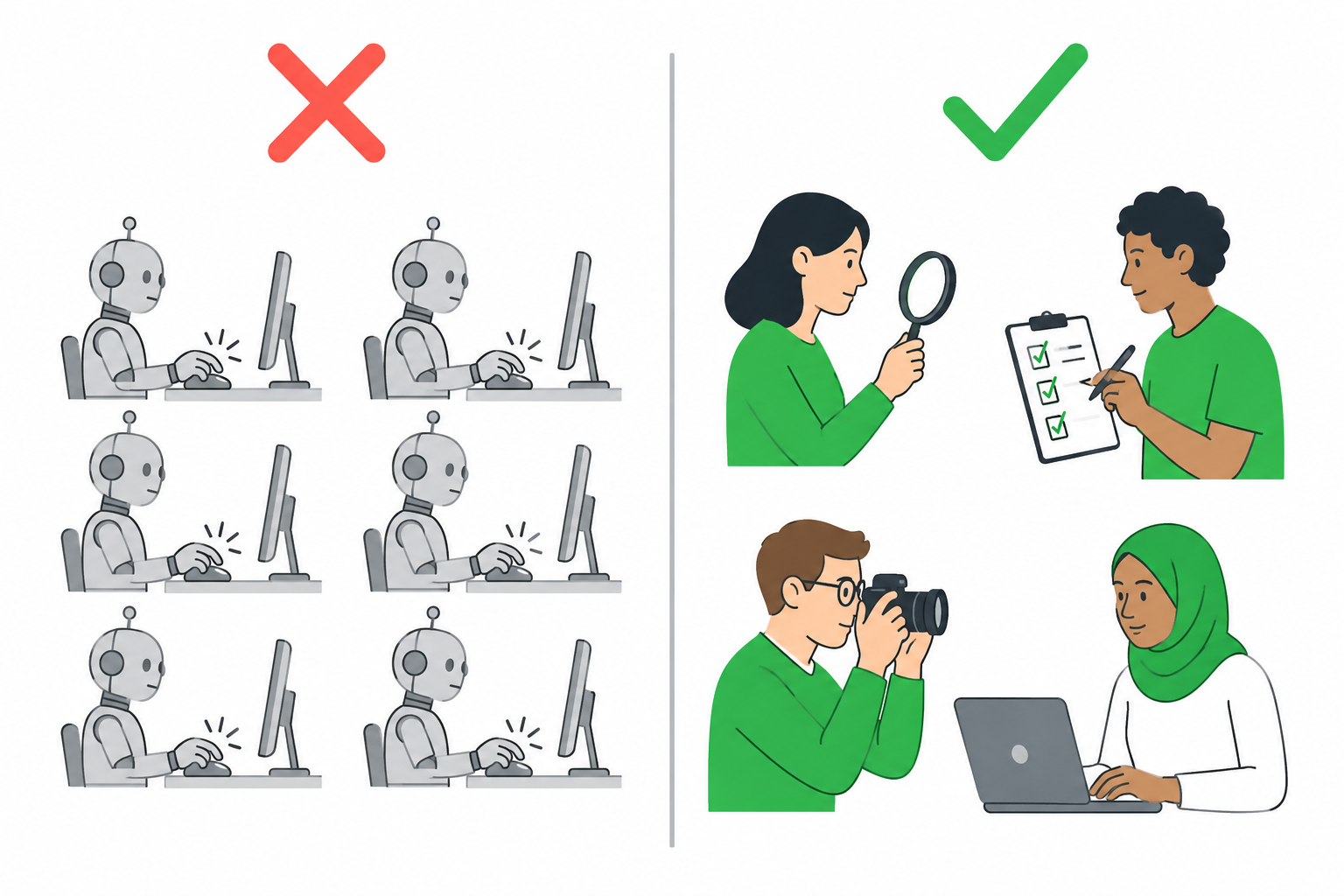
The one thing SEO practitioners unanimously agree on for 2026: E-E-A-T (experience, expertise, authoritativeness, trustworthiness) matters more than ever, because it's the filter AI systems use to decide which sources to trust. And the first E — experience — is precisely what mass-produced AI content lacks.
A distributed workforce injects real experience at scale: real users testing your product and describing what they found, native speakers reviewing localized pages so international content reads like it was written in-market rather than machine-translated, and human reviewers fact-checking AI-assisted drafts before anything ships. AI writes fast; humans make it trustworthy. In 2026, the trustworthy version is the one that gets cited.
6. Find the UX problems hurting your rankings
User experience is a ranking factor, but lab metrics like Core Web Vitals only catch technical slowness — not human confusion. Real workers on real devices will find what the metrics miss: the cookie banner that blocks the content on a mid-range Android phone, the checkout step that fails on mobile Safari, the navigation label nobody understands. Usability testing across a genuinely diverse pool of devices, connection speeds, and countries surfaces the friction that keeps visitors bouncing — and bounces are a signal search engines notice.
What a workforce should not do for your SEO
Honesty matters here, both for your rankings and ours. Some "SEO tasks" floating around the industry are manipulation, and they backfire: paying for fake clicks on search results, buying fabricated reviews, or mass-producing spam links violates search engine policies (and, for undisclosed paid reviews, consumer protection law in many countries). Search engines have become very good at detecting coordinated inauthentic behavior, and the penalty costs far more than the shortcut ever earned. A distributed workforce is powerful because it supplies authentic human input — research, verification, judgment, experience. Use it for that, and the effect compounds instead of collapsing in the next spam update.
Getting started
The practical beauty of micro-tasking for SEO is granularity: you don't hire an agency or commit to a retainer — you post a task. Start with one campaign: a SERP visibility check across ten countries, a NAP audit of your fifty local listings, or intent labeling for your top hundred keywords. Screen workers with a qualification test so only people who understand the task work on it, review submissions with proof attached, and pay only for approved work.
Search visibility in 2026 is decided by trust signals that only real humans can generate. The brands winning aren't the ones producing the most content — they're the ones whose presence is verified, whose data is original, and whose content carries genuine experience. A distributed workforce is how you produce those signals at scale.
Ready to put a global workforce behind your SEO? Create your first campaign on TaskerData and get verified, human-powered results within days.