
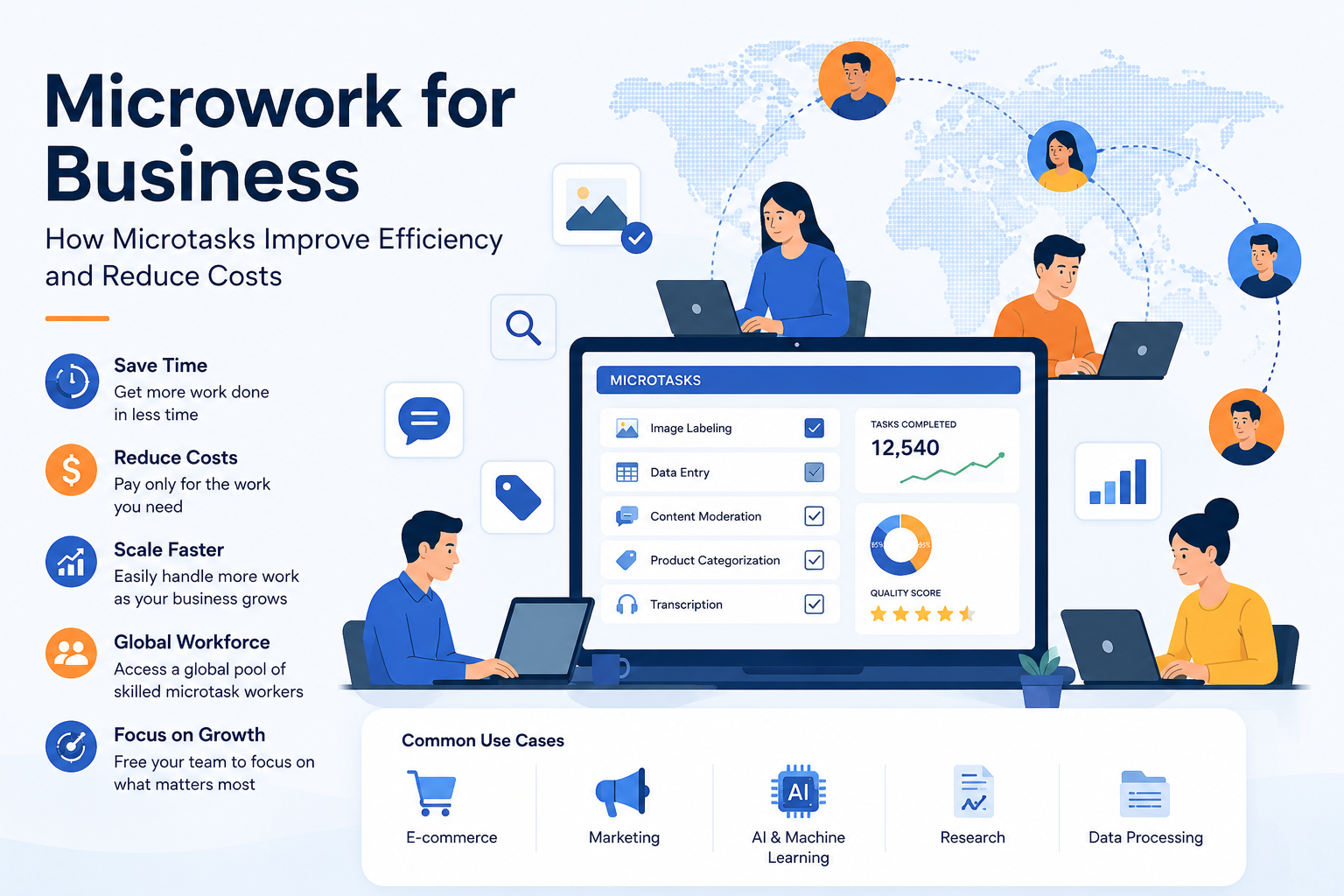
What Is Microwork in Business?
Microwork (also called microtasking) is a business model where large projects are broken into small, simple tasks that are distributed to remote workers online.
Each microtask is quick to complete and usually requires minimal training, such as:
- Data entry and data cleaning
- Image annotation and labeling
- Product categorization for e-commerce
- Content moderation
- Transcription and translation
- Online research and lead generation
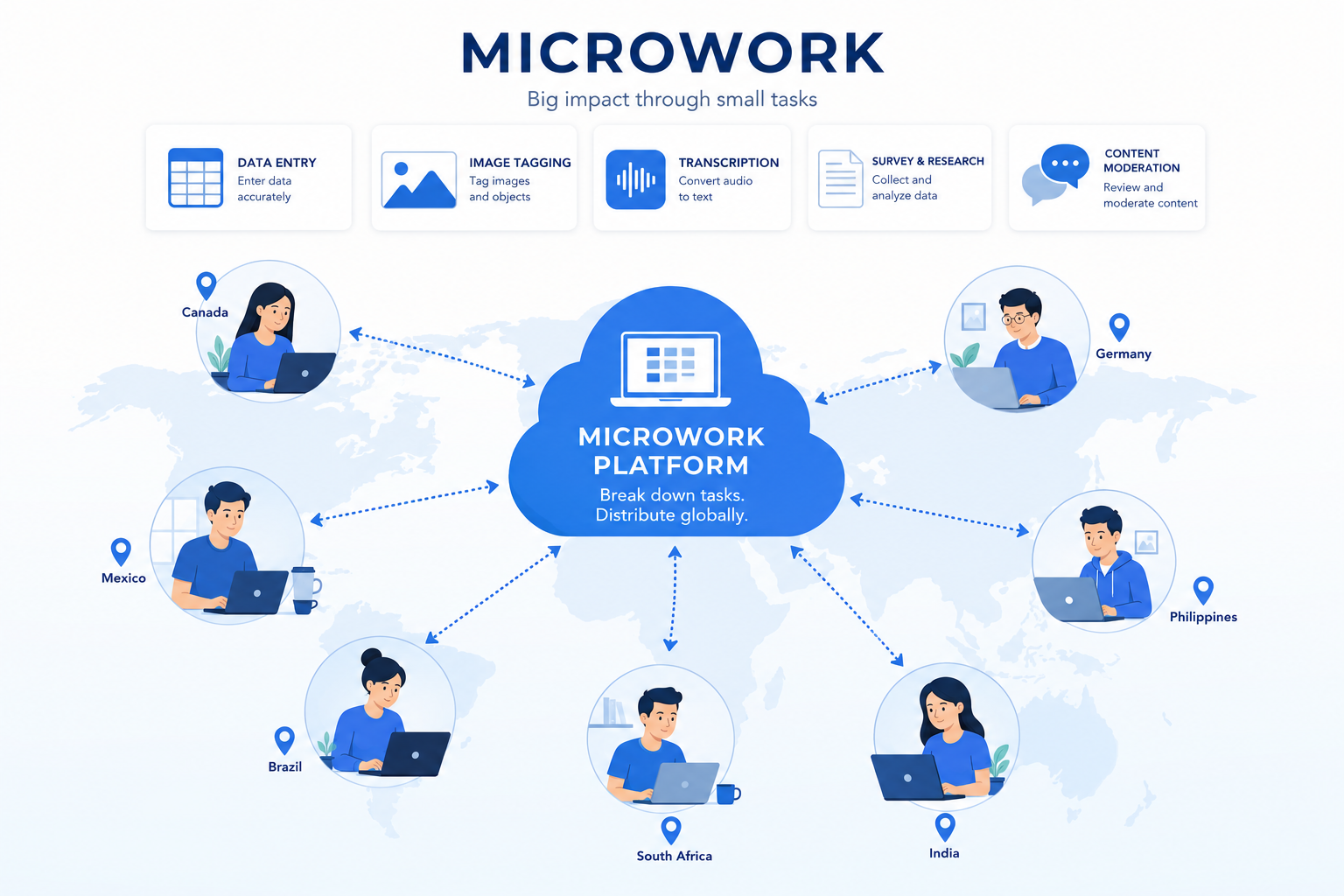
Businesses use microwork platforms to complete large workloads faster, cheaper, and more efficiently than traditional hiring models.
Why Microwork Is Important for Modern Businesses
Today’s companies need to process large amounts of data, improve automation, and scale operations quickly. Microwork provides a flexible solution.
Key benefits of microwork for businesses:
- Faster task completion through global workforce distribution
- Reduced operational and staffing costs
- On-demand scalability for large projects
- Access to a global pool of remote workers
- Improved productivity for internal teams
This makes microwork especially valuable for startups, SaaS companies, and data-driven organizations.
How Microwork Helps Businesses Save Time and Money
One of the biggest advantages of microwork is cost efficiency.
Instead of hiring full-time employees for repetitive tasks, businesses only pay for completed microtasks. This eliminates:
- Recruitment costs
- Employee training expenses
- Long-term salary commitments
- Infrastructure overhead
Because tasks are distributed globally, companies can also take advantage of lower labor costs while maintaining high output volume.
Microwork and Artificial Intelligence (AI)
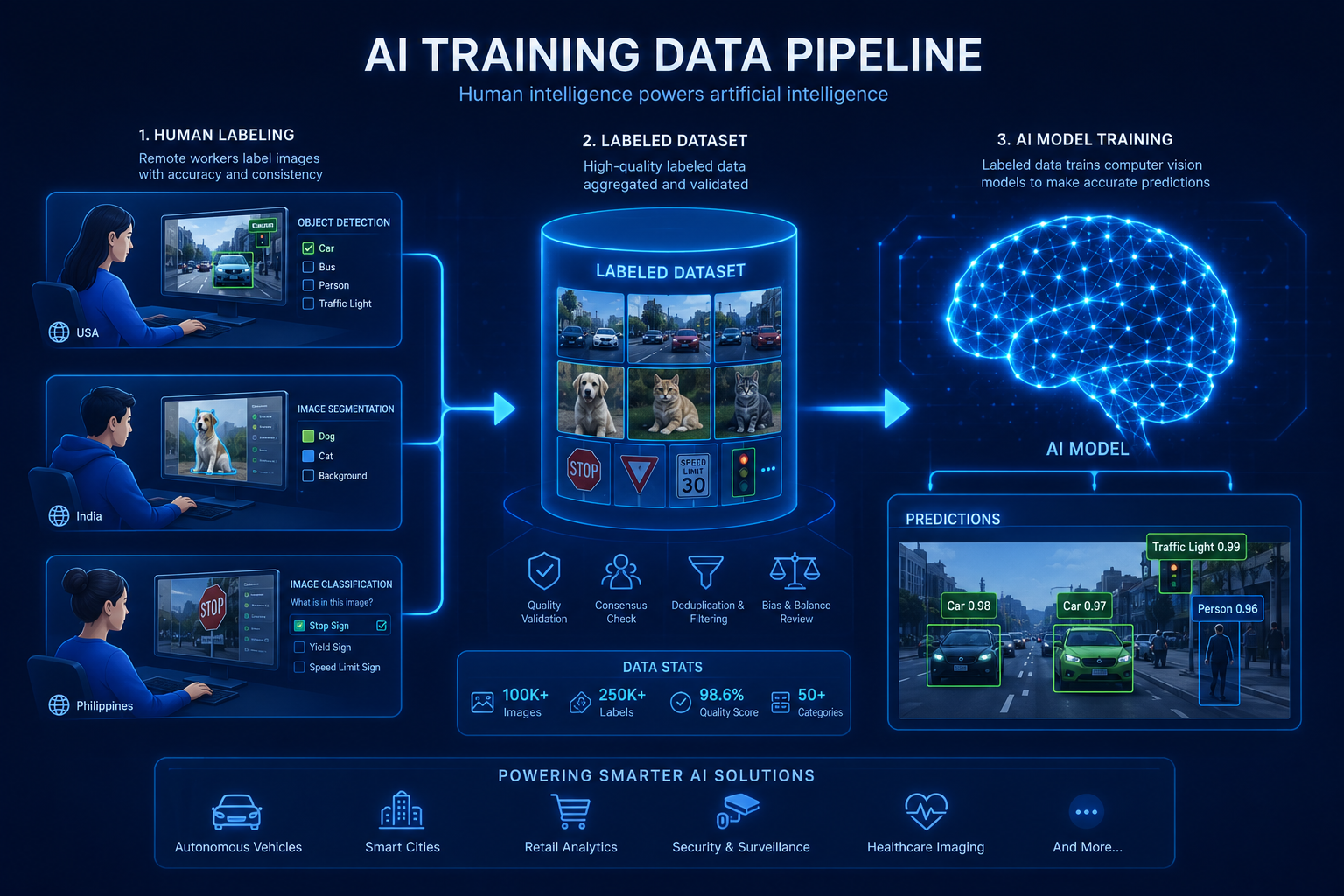
Microwork plays a critical role in the development of artificial intelligence (AI) and machine learning systems.
AI models require large datasets that must be:
- Labeled
- Verified
- Structured
- Cleaned
Human workers perform essential microtasks such as:
- Image recognition labeling for computer vision
- Sentiment analysis of text data
- Audio transcription for speech models
- Data validation and correction
Without microwork, most modern AI systems would not be able to train effectively.
Common Business Use Cases for Microwork
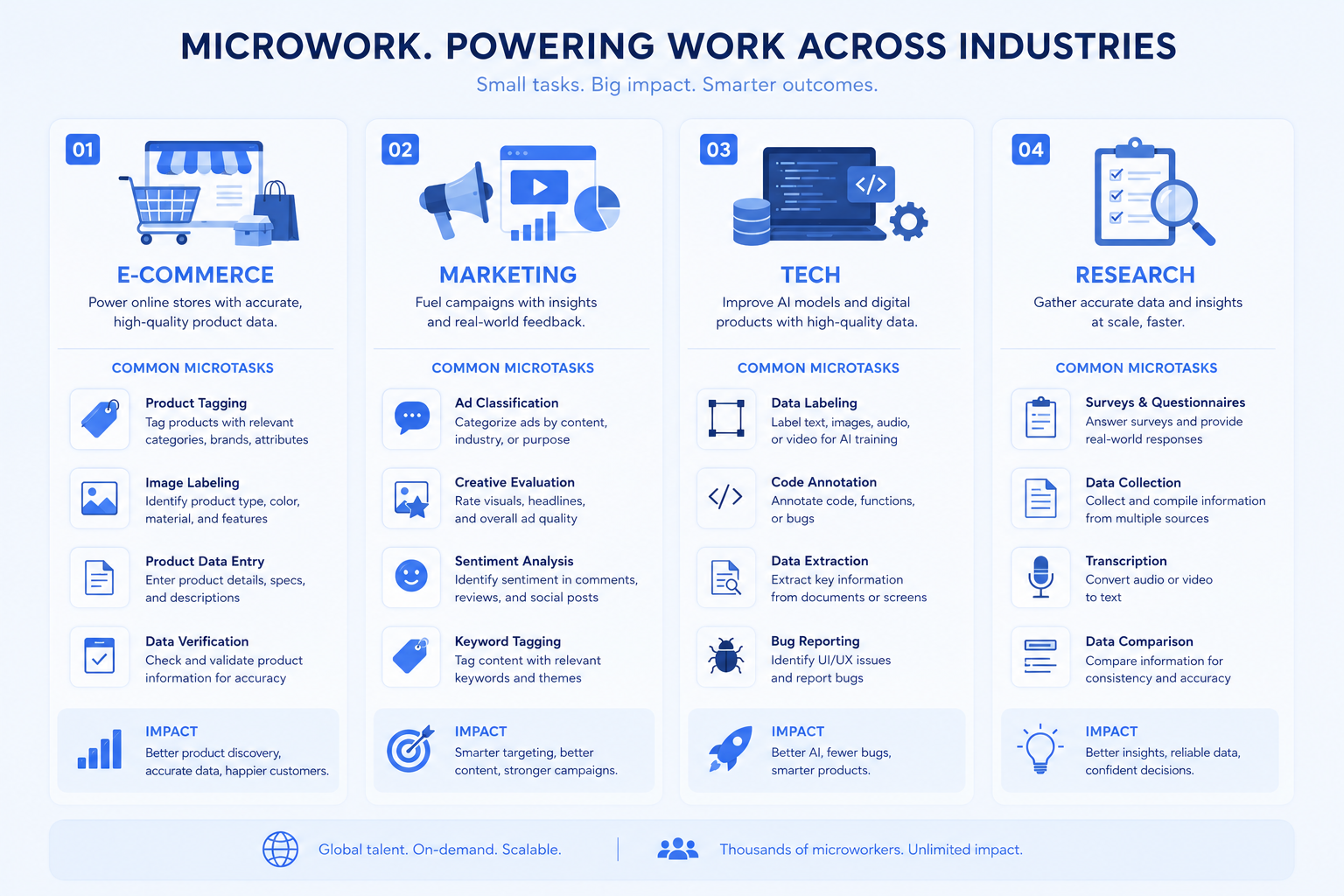
Microwork is used across many industries, including:
E-commerce businesses
- Product tagging and categorization
- Review moderation
- Inventory data updates
Marketing agencies
- Lead generation and prospect research
- SEO data collection
- Content enrichment
Technology companies
- AI dataset labeling
- UX testing feedback collection
- Data verification
Research and analytics firms
- Survey participation
- Data gathering at scale
- Market research support
Microwork vs Traditional Outsourcing
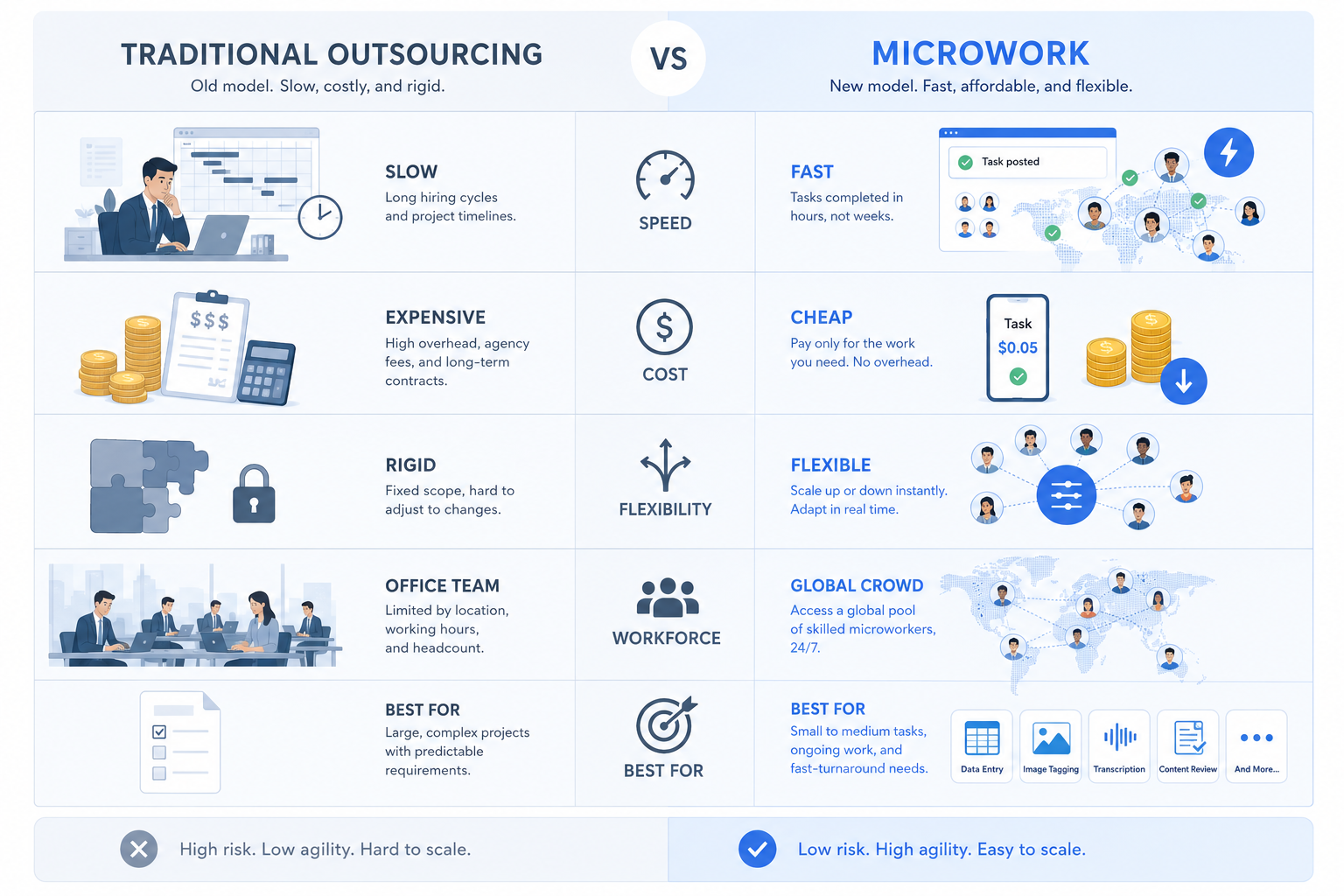
Microwork differs from traditional outsourcing in several key ways:
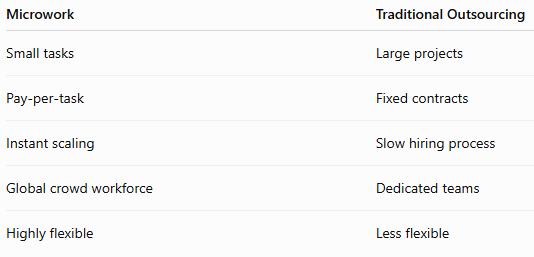
This flexibility is why microwork is rapidly becoming a preferred model for modern digital businesses.
Challenges of Using Microwork
While microwork offers many advantages, businesses should also consider potential challenges:
- Maintaining consistent quality control
- Writing clear task instructions
- Managing data security and privacy
- Ensuring reliable worker performance
These challenges can be solved with proper workflow design, validation systems, and platform tools.
How to Get Started with Microwork for Your Business
If you want to implement microwork in your company, follow these steps:
- Identify repetitive or time-consuming tasks
- Break tasks into simple microtasks
- Define clear instructions and quality standards
- Use a microwork or microtask platform
- Monitor output and optimize workflows
Starting small and scaling gradually is the most effective approach.
Final Thoughts: Why Microwork Is the Future of Business Efficiency
Microwork is transforming how businesses operate by making large-scale task execution faster, cheaper, and more flexible.
As companies continue to adopt AI, automation, and remote workflows, microwork will become an essential part of modern digital infrastructure.
Businesses that adopt microwork early gain a competitive advantage in speed, scalability, and cost efficiency.