

Introduction: Why AI Needs Better Data
Artificial intelligence is transforming how businesses operate, from automated customer support and recommendation systems to computer vision and advanced analytics. However, behind every successful AI system is one essential ingredient: high-quality data.
AI models learn from examples. The more accurate, diverse, and relevant those examples are, the better the model performs. While algorithms continue to become more advanced, businesses still need human input to collect, review, organize, and validate the information that powers these systems.
This is where crowdsourced data collection becomes valuable. By connecting businesses with distributed teams of workers, companies can gather real-world data faster, test ideas more efficiently, and build AI solutions that perform better in real-world environments.
What Is Crowdsourced Data Collection?
Crowdsourced data collection is the process of gathering information from a large group of people through online platforms. Instead of relying only on an internal team, businesses can distribute small, clearly defined tasks to many contributors who complete them from different locations.
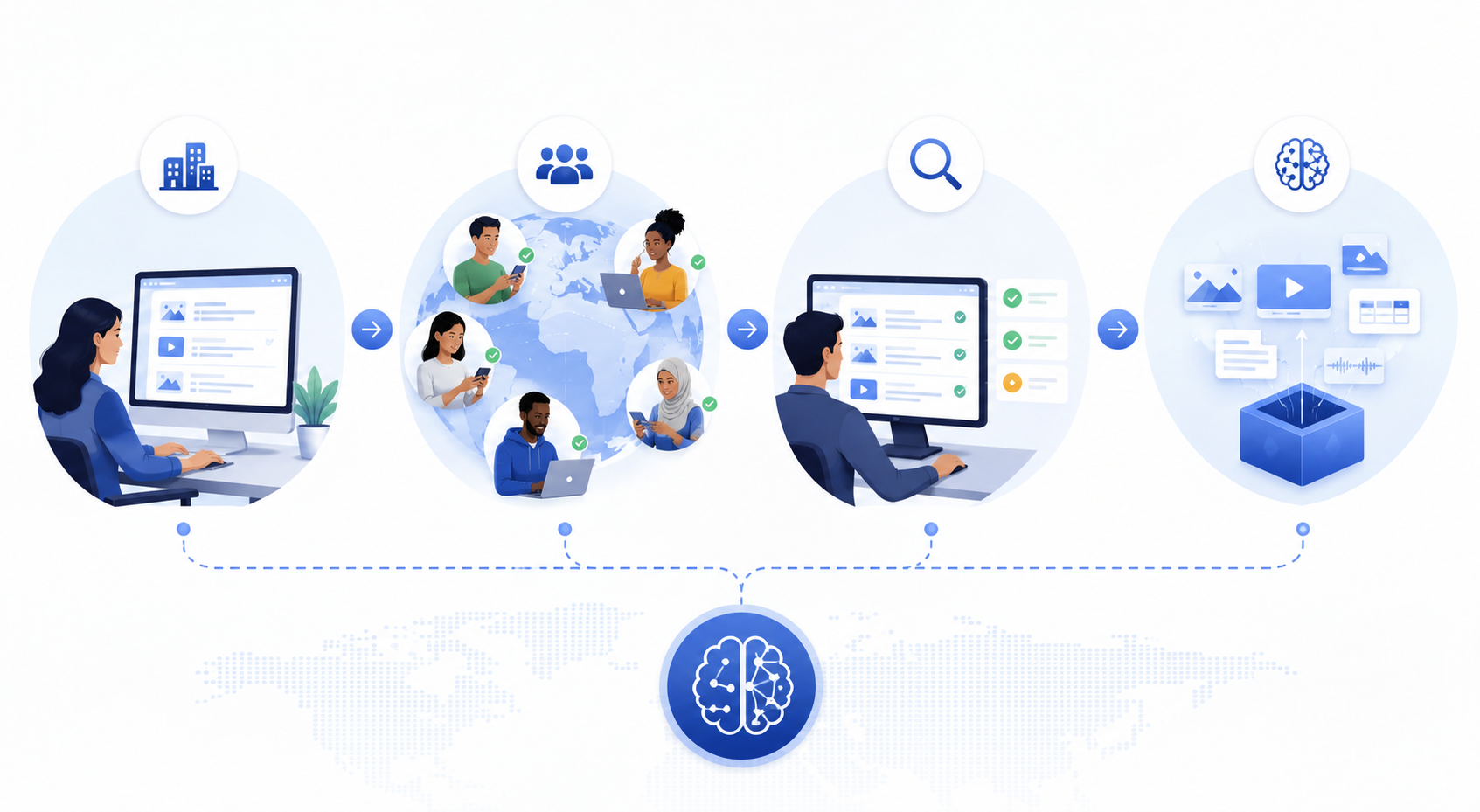
These tasks may include:
- Labeling images for computer vision models
- Reviewing and categorizing text data
- Testing websites and mobile applications
- Collecting location-based information
- Recording user feedback
- Verifying information accuracy
- Completing surveys and research tasks
Because tasks are distributed across many people, businesses can collect large amounts of data while reaching different demographics, locations, and user perspectives.
Why Traditional Data Collection Is Often Not Enough
Many companies still struggle with collecting the amount and variety of data required for modern technology.
Traditional approaches often involve:
- Internal employees manually completing repetitive tasks
- Hiring specialized teams for every project
- Working with limited geographic areas
- Spending significant time on data preparation
These methods can become expensive and difficult to scale, especially when a project requires thousands or millions of individual data points.
Crowdsourced data collection provides a flexible alternative. Businesses can launch campaigns based on their specific requirements and scale the amount of work depending on their needs.
How Crowdsourced Data Helps Train AI Models
AI systems require structured examples before they can make accurate decisions. Human contributors help transform raw information into usable training data.

Image Annotation
Computer vision systems need labeled images to understand objects, environments, and patterns.
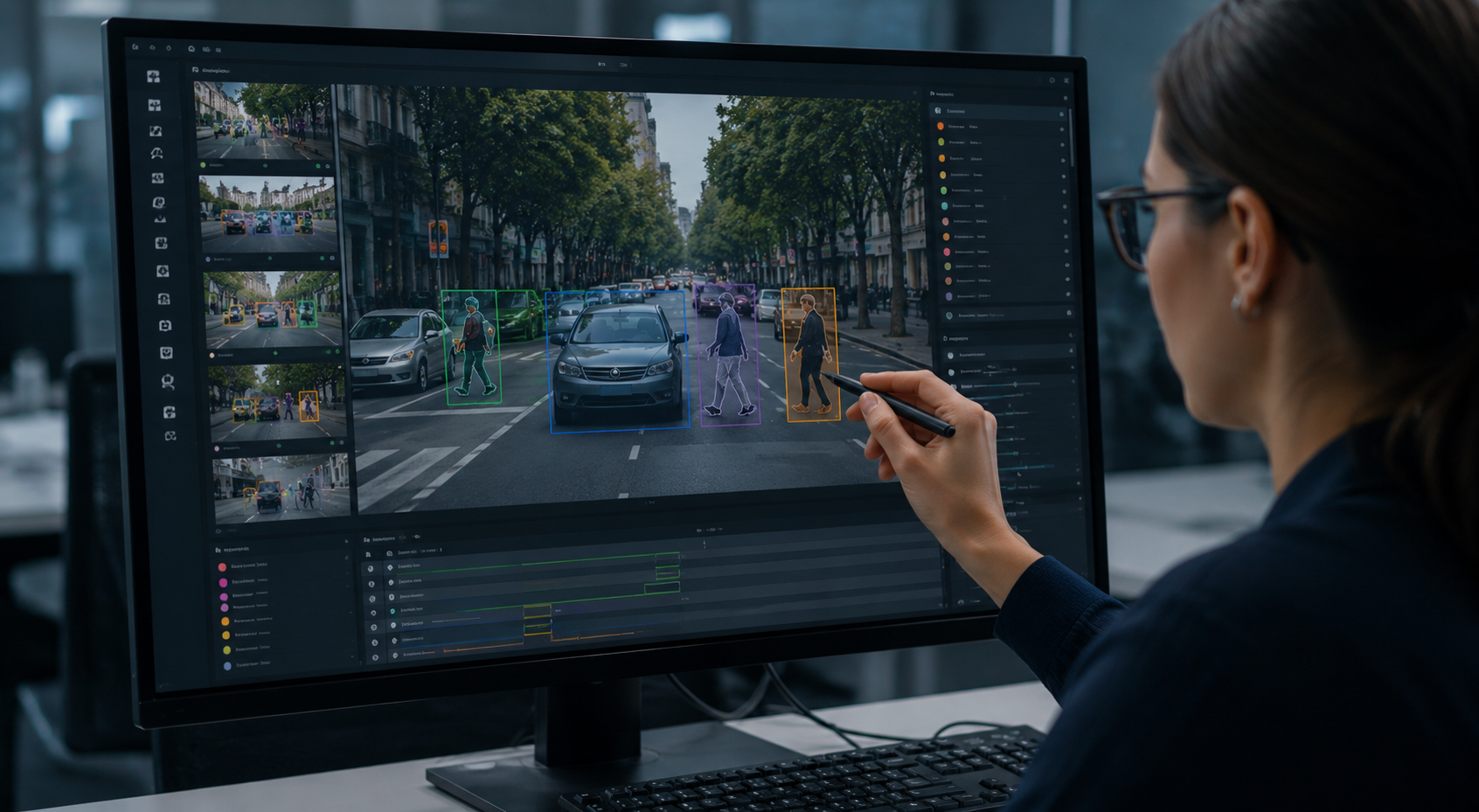
Examples include:
- Identifying products in retail images
- Detecting objects in autonomous vehicle systems
- Training facial recognition technology
- Categorizing images for search applications
Human reviewers help AI models understand what is shown in an image and create accurate labels.
Text Classification and Review
Many AI applications rely on understanding language. Human contributors can help categorize and evaluate text data.
Examples include:
- Sentiment analysis
- Content moderation
- Search improvement
- Chatbot training
- Language model evaluation
Human feedback helps improve accuracy and ensures AI systems better understand real-world communication.
Data Verification and Quality Checks
Raw data often contains mistakes, missing information, or inconsistencies. Human review helps businesses identify problems before data is used for important applications.
Quality verification can include:
- Checking accuracy
- Confirming information
- Comparing results
- Reviewing AI-generated outputs
This human validation process is especially important as companies increasingly use AI in customer-facing products.
Common Business Applications of Crowdsourced Data Collection
Crowdsourced data is useful across many industries.
Artificial Intelligence and Machine Learning
AI companies use human-generated datasets to train and improve models.
Common projects include:
- Data labeling
- Model evaluation
- AI response ranking
- Training dataset creation
Human feedback helps create AI systems that are more reliable and useful.
Retail and E-Commerce
Retail businesses need accurate information about products, customers, and markets.
Crowdsourced tasks can support:
- Product information verification
- Price monitoring
- Store checks
- Customer feedback collection
This allows businesses to understand market conditions more effectively.
Mobile Apps and Software Products
Before launching a product, companies need to understand how real users interact with it.
Crowd testing can help identify:
- Usability issues
- Navigation problems
- User experience improvements
- Device compatibility issues
Real-world testing provides insights that internal teams may miss.
Market Research
Businesses often need consumer opinions before making decisions.
Crowdsourced research can help collect:
- Customer preferences
- Brand opinions
- Product feedback
- Regional insights
This allows companies to make decisions based on actual user behavior.
Crowdsourcing vs Traditional Data Collection

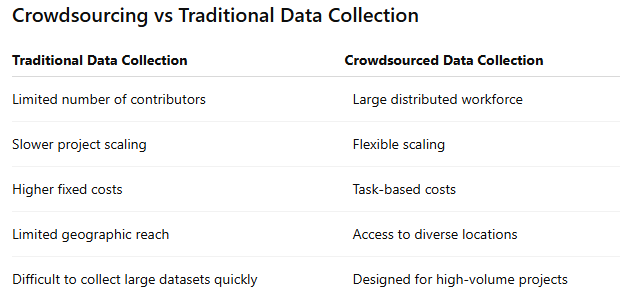
The right approach depends on the project, but many businesses combine internal expertise with crowdsourced support to achieve better results.
The Importance of Human-in-the-Loop AI
As AI technology advances, human involvement remains essential.
Human-in-the-loop systems combine machine intelligence with human judgment. Instead of replacing people completely, AI systems use human feedback to improve accuracy and reliability.

Human input is especially valuable when:
- Context matters
- Decisions require judgment
- Data quality must be verified
- AI predictions need evaluation
For many businesses, the future of AI depends on creating a strong connection between automated systems and human expertise.
How Businesses Can Create Successful Data Collection Campaigns
A successful crowdsourced project requires careful planning.
1. Create Clear Instructions
Workers perform better when tasks are easy to understand. Businesses should provide:
- Detailed instructions
- Examples of correct submissions
- Clear quality requirements
2. Define Quality Standards
Before launching a campaign, companies should decide:
- What makes a submission acceptable?
- How will results be reviewed?
- What errors should be rejected?
Clear standards improve consistency.
3. Start Small and Scale
Testing a project with a smaller group allows businesses to identify problems before expanding.
Companies can improve instructions, adjust workflows, and optimize quality before collecting larger datasets.
4. Monitor Results
Regular review helps ensure the collected data meets business requirements.
Important measurements include:
- Completion rates
- Accuracy levels
- Worker performance
- Data consistency
How TaskerData Helps Businesses Scale Data Collection
Platforms like TaskerData make it easier for businesses to connect with distributed workers and manage data collection projects.
Companies can create tasks, provide requirements, collect submissions, and review completed work through a structured workflow.
Whether a business needs AI training data, product research, testing support, or real-world information collection, crowdsourced platforms provide a scalable way to access human-powered data.
The Future of Crowdsourced Data and AI
As artificial intelligence continues to grow, the demand for high-quality human-generated data will increase.
AI models will require:
- More diverse datasets
- Better human feedback
- More accurate labeling
- Continuous evaluation
Businesses that combine advanced AI tools with reliable human input will have an advantage in building better products and services.
Crowdsourced data collection is becoming an important part of modern technology development. By using distributed human teams, companies can collect valuable insights, improve AI performance, and create solutions that work better for real users.

Conclusion
AI is only as strong as the data behind it. While technology can process information at incredible speed, human expertise remains essential for collecting, organizing, and validating quality data.
Crowdsourced data collection gives businesses a practical way to scale these efforts, access diverse perspectives, and build smarter AI systems.
For companies developing the next generation of digital products, combining artificial intelligence with human intelligence is the path toward better results.